
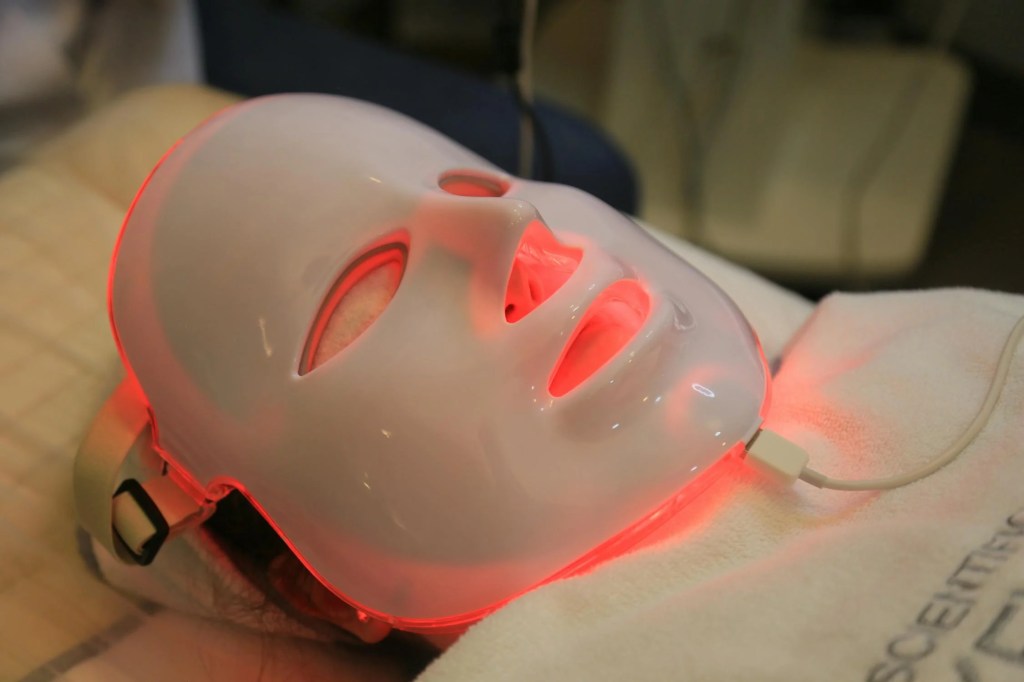
In the ever-evolving world of skincare, LED light therapy has gained significant traction as a non-invasive, effective treatment for various skin concerns. But how does it work, and which wavelengths are truly beneficial for your skin? Let’s explore the science behind this innovative therapy and uncover how specific light wavelengths contribute to a glowing complexion.
What is LED Light Therapy?
LED (Light Emitting Diode) therapy is a skincare treatment that uses varying wavelengths of light to address concerns such as acne, aging, and inflammation. Originally developed by NASA for wound healing, this technology has since been embraced by dermatologists and aestheticians for its powerful skin-rejuvenating properties (Barolet & Boucher, 2008).
The Key Wavelengths for Skin Health
For LED light therapy to be effective, the specific wavelengths must penetrate the skin at the correct depth and trigger cellular responses. The most widely studied and beneficial wavelengths for skincare include:
Red Light (620-750 nm)
Red light penetrates deep into the skin, stimulating fibroblast activity and promoting collagen and elastin production. Studies show that red light at 633 nm can significantly improve skin texture, reduce fine lines, and enhance overall skin tone (Avci et al., 2013). It also aids in reducing inflammation, making it beneficial for conditions such as rosacea.
Near-Infrared Light (750-1200 nm)
Near-infrared light penetrates even deeper than red light, improving circulation and promoting wound healing. A study by Huang et al. (2009) found that near-infrared light at 830 nm enhances cellular repair processes and reduces oxidative stress, which can slow signs of aging.
Blue Light (405-470 nm)
Best known for its antibacterial properties, blue light therapy is particularly effective for acne-prone skin. It works by targeting Propionibacterium acnes, the bacteria responsible for breakouts. Research indicates that blue light at 415 nm can reduce acne lesions by up to 77% over 12 weeks of consistent use (Gold et al., 2011).
Green Light (520-570 nm)
Green light is less commonly discussed but is gaining recognition for its ability to reduce pigmentation and even out skin tone. Some studies suggest that wavelengths around 532 nm can help with hyperpigmentation and redness (Lee et al., 2007).
Does LED Light Therapy Really Work?
Scientific research supports the efficacy of LED light therapy when used correctly. A 2014 study found that participants who used red and near-infrared light therapy for 30 sessions experienced a 36% increase in collagen density (Jagdeo et al., 2014). However, consistency is key—most experts recommend regular treatments over several weeks to see visible improvements.
Is LED Light Therapy Safe?
When used as directed, LED light therapy is generally considered safe and free from harmful side effects. However, individuals with photosensitivity or certain medical conditions should consult a healthcare provider before beginning treatment.
Conclusion
LED light therapy offers a promising, science-backed approach to skincare. Whether you’re targeting acne, aging, or uneven skin tone, understanding the right wavelengths can help maximize results. For best outcomes, consider professional guidance or a high-quality at-home device with clinically proven specifications.
Disclaimer: This article is for informational purposes only and does not constitute medical advice. Always consult with a healthcare professional before starting any new skincare treatment. The blog and its authors are not liable for any adverse effects resulting from the use of LED light therapy.
References
- Avci, P., Gupta, A., Sadasivam, M., Vecchio, D., Pam, Z., Pam, N. & Hamblin, M. R. (2013). Low-level laser (light) therapy (LLLT) in skin: stimulating, healing, restoring. Seminars in Cutaneous Medicine and Surgery, 32(1), 41-52.
- Barolet, D. & Boucher, A. (2008). LED photoprevention: Reduced MED response following multiple LED exposures. Lasers in Surgery and Medicine, 40(2), 106-112.
- Gold, M. H., Biron, J. A., & White, W. M. (2011). Clinical efficacy of home-use blue-light therapy for mild to moderate acne. Journal of Clinical and Aesthetic Dermatology, 4(10), 43-50.
- Huang, Y. Y., Chen, A. C., Carroll, J. D., & Hamblin, M. R. (2009). Biphasic dose response in low level light therapy. Dose-Response, 7(4), 358-383.
- Jagdeo, J. R., Adams, L. E., Brody, N. I., & Siegel, D. M. (2014). Transcutaneous red and near-infrared light transmission in a human skin model. Lasers in Surgery and Medicine, 46(10), 664-671.
- Lee, S. Y., Park, K. H., Choi, J. W., Kwon, J. K., & Lee, K. H. (2007). A prospective, randomized, placebo-controlled, double-blinded study of LED phototherapy for skin rejuvenation. Journal of the American Academy of Dermatology, 56(4), 659-667.
 VIVANT BLOOM